Pacific Palisades Remodeling — Header
Now accepting fire rebuild projects
Pacific Palisades Remodeling
Hillside Construction Pacific Palisades | Hillside Contractor & Grading Specialist
Hillside construction Pacific Palisades steep lot caisson foundation retaining wall
Caisson foundations
Drilled to bedrock on every steep lot
BHO compliance
Baseline Hillside Ordinance experts
Grading permits
LADBS + Coastal Commission
Retaining walls
$200–$600+/LF engineered systems
Hillside construction · Pacific Palisades

Built for the slope.
Engineered to last.

Hillside construction in Pacific Palisades — caisson foundations, retaining walls, grading permits, and Baseline Hillside Ordinance compliance. 18 years on Palisades hillside lots. CSLB #982386. Structural engineering, geotechnical coordination, and all permits handled in-house.

18 yrs
In the PalisadesHillside specialists
40–80%
Hillside premiumOver flat-lot construction
5
Average rating107 reviews
CSLB #982386
Licensed · ActiveClass B General Contractor
Hillside Construction Trust — Pacific Palisades Remodeling
License
CSLB #982386 · Active
Class B General Contractor
Foundation expertise
Caissons to Bedrock
$800–$1,500+/LF drilled caissons
BHO compliance
Baseline Hillside Ordinance
Grading permits + LADBS + Coastal
Experience
18 Years in the Palisades
Highlands · Riviera · Rustic Canyon
Rating
5★ · 107 Reviews
Google · Yelp · Houzz
Hillside Construction Challenges Pacific Palisades
Why hillside construction is different

What makes hillside lots in Pacific Palisades uniquely complex

Hillside construction in Pacific Palisades costs 40–80% more than flat-lot construction — not because of the structure above grade, but because of everything below it. The geology, slope, and regulatory environment here require a contractor who has done this before — repeatedly, in this specific neighborhood.

01
Ancient landslide deposits & unstable soils

Pacific Palisades is built on decomposed granite and ancient landslide deposits — among the most geologically complex terrain in Los Angeles. A geotechnical soils report is required on every hillside project, and findings frequently dictate the foundation system before an architect draws a single line. Post-fire conditions add water-repellent soil layers that elevate mudslide risk further.

Soils report required · Every project
02
Caisson foundations — drilled to bedrock

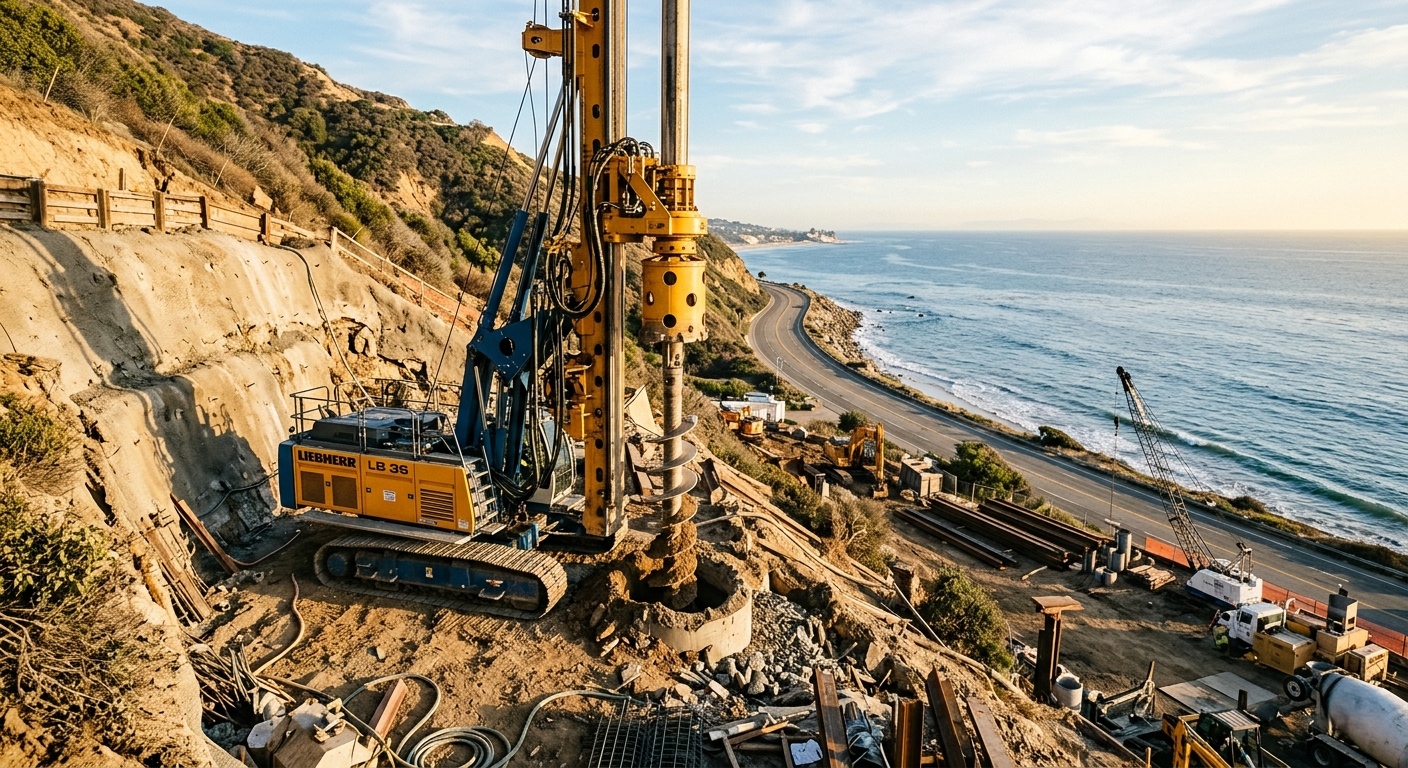
Most steep Palisades lots cannot use conventional slab or spread-footing foundations. Caissons — large-diameter concrete piles drilled through the slope to bedrock — are the standard solution. Depth ranges from 20 to 60+ feet depending on where bedrock sits. Grade beams span between caissons at the surface, distributing the structural load. Cost: $800–$1,500+ per linear foot.

$50,000–$200,000+ typical foundation cost
03
Retaining walls — engineered and permitted

Any retaining wall over 4 feet in height requires a building permit, structural engineering plans, and a soils report in Los Angeles. Hillside lots in the Palisades routinely require 6–12 foot engineered retaining walls with drainage systems behind the face. Concrete, soldier pile, or cantilevered wall systems — selection depends on slope angle, surcharge loads, and neighbor proximity.

$200–$600+/linear foot
04
Site access & construction logistics

Narrow winding Palisades hillside roads create real construction challenges. Cranes, concrete trucks, and material deliveries all require planning that flat-lot contractors never think about. Haul route permits are required for soil export over 1,000 cubic yards. Working hours are restricted under the Hillside Construction Regulation (HCR) District — 8 AM–6 PM weekdays, interior work only on Saturdays.

HCR working hour restrictions apply
05
Drainage, stormwater & erosion control

Water is the greatest threat to hillside structural integrity. LA City requires all stormwater from below-street-grade construction to be directed back to the street — often requiring sump pump systems on Palisades lots that sit below street level. Erosion control plans, drainage swales, and engineered drainage behind retaining walls are mandatory on every hillside grading permit.

Sump systems required on many lots
The hillside cost premium
What you pay for below the first floor
Geotechnical soils reportSlope stability + soil analysis
$4K–$15K
Caisson foundation systemDrilled to bedrock + grade beams
$50K–$200K
Retaining wallsEngineered + permitted
$20K–$120K
Grading + haul routeCut/fill + soil export
$15K–$80K
Drainage + sump systemsStormwater management
$8K–$40K
Access + crane logisticsHaul routes, crane pads
$5K–$30K
Typical below-grade premium
Before structure, finishes, or systems
$100K–$485K
Caisson foundation drilling Pacific Palisades hillside construction
Caisson drilling on a Highlands lot — 38-foot depth to bedrock
Key regulation · Pacific Palisades
Baseline Hillside Ordinance (BHO)

The BHO governs almost every aspect of hillside construction in Pacific Palisades — grading limits, maximum cubic yards of cut and fill, height restrictions tied to natural grade, and retaining wall height limits. The Brentwood-Pacific Palisades Specific Plan adds an additional layer of restrictions on top of the citywide BHO. We confirm your lot's specific BHO envelope before design begins — it shapes every subsequent decision.

Hillside Construction Scope Pacific Palisades
What we handle on hillside projects

Every phase of hillside construction, coordinated in-house

Hillside construction requires geotechnical engineers, structural engineers, civil engineers, and specialty subcontractors — all coordinating before a shovel touches the ground. We manage every discipline from site assessment to final inspection, so you have one point of accountability.
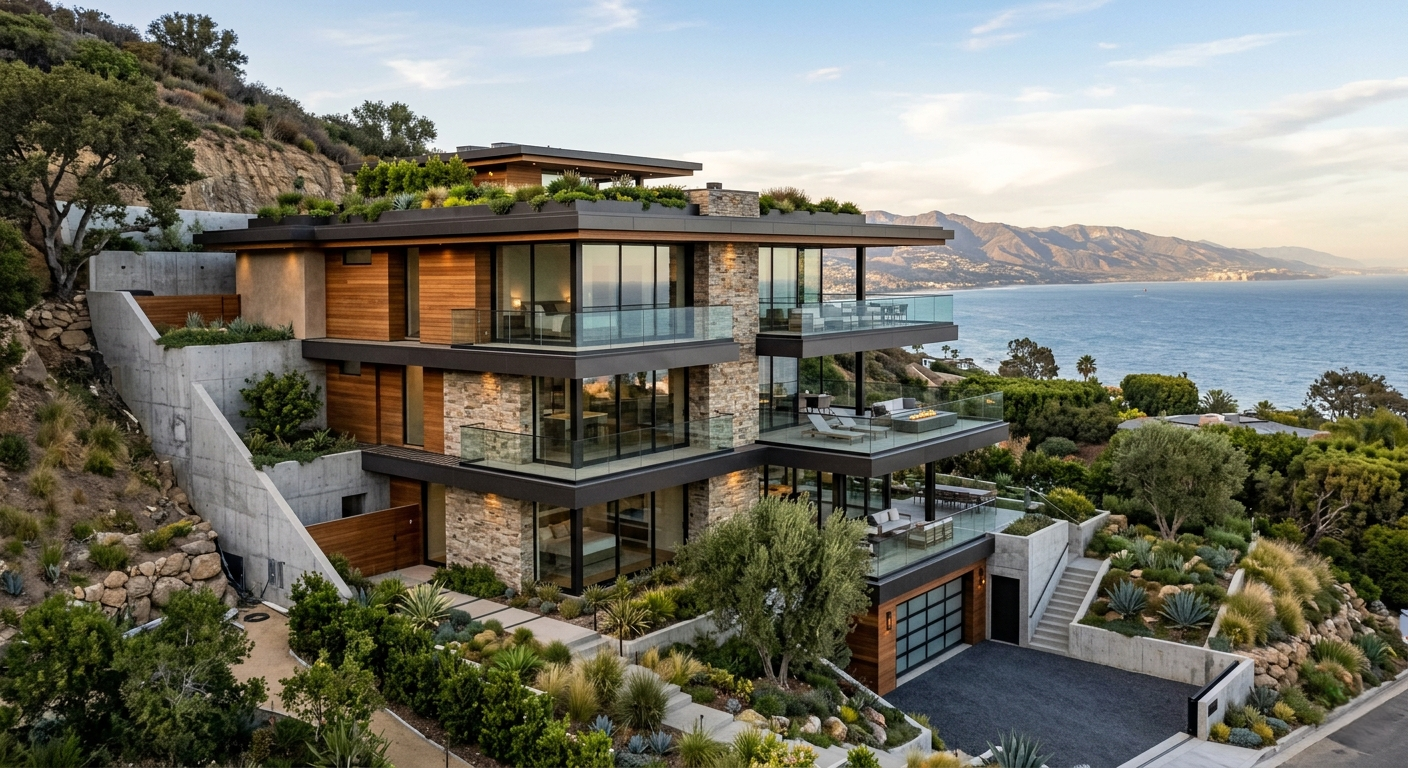
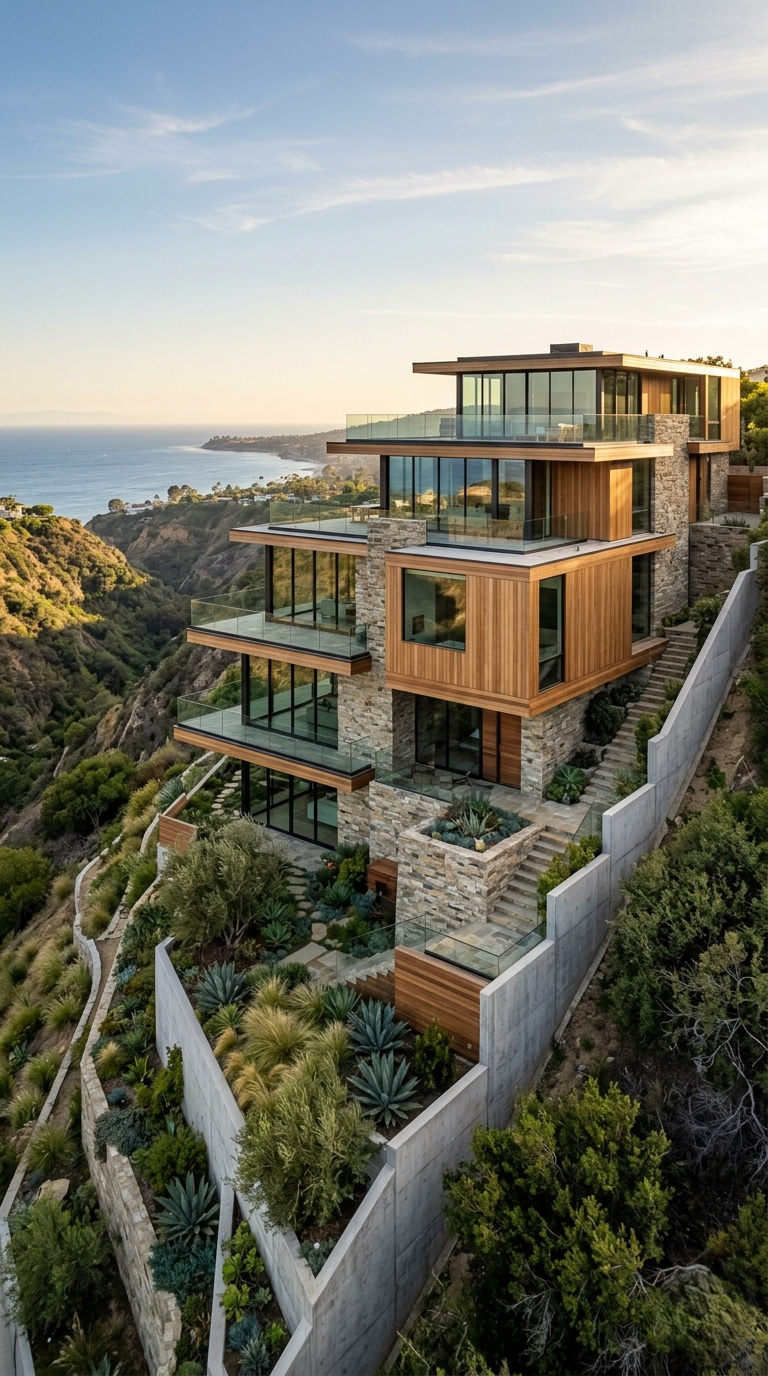
New hillside home construction Pacific Palisades steep lot ocean view modern architecture
Most complex scope · New construction
New Hillside Home Construction

Building a new home on a steep Pacific Palisades lot is the most technically demanding project in residential construction. Every system — foundation, structure, drainage, access — must be engineered for the specific conditions of that slope. We coordinate the full team: geotechnical engineer, structural engineer, civil engineer, architect, and specialty subcontractors.

  • Geotechnical investigation — soils report, slope stability, boring data
  • Caisson foundation system — drilled to bedrock, grade beams, BHO compliant
  • Grading permits — LADBS + Coastal Commission + haul route approval
  • VHFHSZ fire hardening — Chapter 7A materials, ember-resistant vents, zone 0
  • Retaining walls + drainage — engineered, permitted, fully warranted
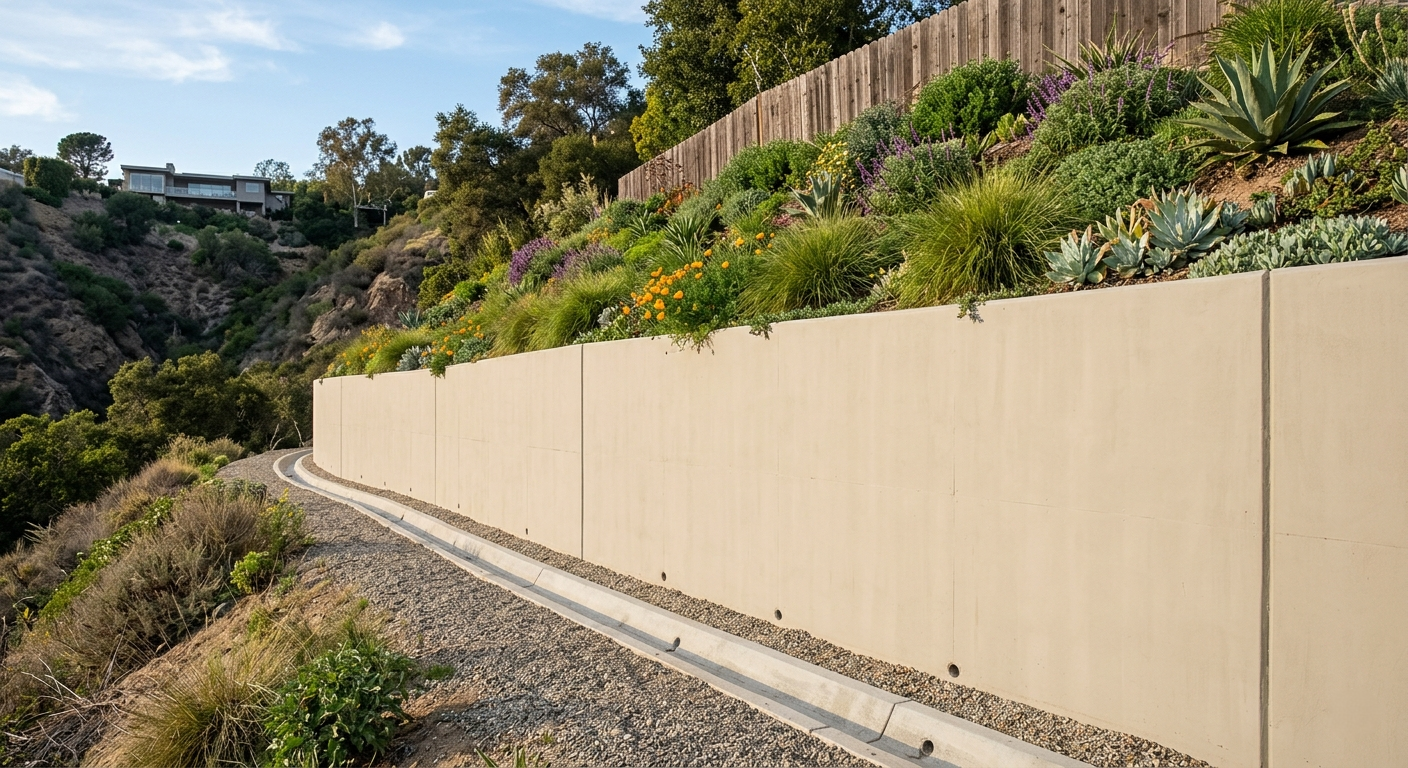
Retaining walls · Hillside grading Pacific Palisades

Retaining Walls & Slope Stabilization

Engineered retaining walls for hillside lots, pool installations, driveway expansions, and new construction. Concrete gravity walls, cantilevered concrete, soldier pile systems — selection depends on wall height, surcharge loads, and soil conditions. Every wall over 4 feet requires engineering and permit. We manage both. $200–$600+/LF depending on system and height.

Hillside grading Pacific Palisades · LADBS

Grading & Earthwork

Hillside grading in Pacific Palisades is governed by the Baseline Hillside Ordinance — maximum cut and fill quantities, slope band analysis, and the BHO grading formula all determine what is permitted on your specific lot. We commission the topographic survey, prepare the grading plans, and submit to LADBS and the Coastal Commission simultaneously — not sequentially.

Hillside home remodeling · Additions

Hillside Home Remodels & Additions

Remodeling or adding to an existing hillside home in the Palisades requires understanding the original foundation system before design begins. We assess existing caissons, grade beams, and retaining systems, confirm their capacity for the proposed addition, and design only what is needed — avoiding expensive over-engineering while ensuring structural adequacy for the expanded scope.

Drainage · Stormwater · Sump systems

Drainage & Stormwater Management

Water is the greatest threat to hillside structural integrity. LA City requires all stormwater from below-street-grade construction to be directed back to the street. Many Palisades lots require sump pump systems. We design and install complete drainage solutions — French drains, drainage swales behind retaining walls, sump basins, and pump systems — all permitted and inspected.

VHFHSZ · Chapter 7A · WUI compliance

Fire Hardening & WUI Compliance

All Pacific Palisades hillside construction is in a Very High Fire Hazard Severity Zone (VHFHSZ). Chapter 7A fire-hardened construction is mandatory — ignition-resistant exterior cladding, ember-resistant vents, enclosed eaves, tempered glazing, and Zone 0 defensible space. We spec and build to WUI standards on every hillside project, not just those that require it.

Hillside Construction Process Pacific Palisades
How hillside projects work

From site assessment to final inspection

Hillside construction in Pacific Palisades typically requires 6–12 months for permitting alone — before a shovel breaks ground. Getting the sequencing right from day one is what separates a 14-month project from a 24-month project. We start the soils report the day we engage, submit all agencies simultaneously, and order long-lead materials before permits are issued.

01
Site assessment · Free
Week 1
Lot analysis & feasibility

We walk the lot, assess slope grade, access conditions, visible soil conditions, neighbor proximity, and BHO grading limits. We confirm what can be built, what permits are required, and give you a realistic cost range and timeline. At no charge.

Free · No obligationBHO envelope confirmedBudget range established
02
Geotechnical
Weeks 1–8
Soils report & slope stability — starts day one

We commission the geotechnical engineer the day we engage — not after design is complete. The soils report — borings, lab testing, slope stability analysis, and foundation recommendations — takes 6–8 weeks and is the critical-path item on every hillside project. Starting it first saves 2 months on the overall timeline.

Commissioned day 1Foundation system determined6–8 weeks typical
03
Design & engineering
Weeks 4–16
Architecture, structural, civil & grading plans — all simultaneous

Architectural drawings, structural engineering (caisson design, grade beams, retaining walls), civil engineering (grading plan, drainage, stormwater), and slope band analysis prepared in parallel — coordinated as one integrated package. Finish selections made before permits are submitted so there are no mid-construction decision delays.

All disciplines coordinatedGrading plan preparedSelections before permits
04
Permits
Months 3–12
All agencies submitted simultaneously — never sequentially

LADBS building permit, LADBS grading permit, Coastal Commission CDP, Geology Division approval, haul route permit, and HOA architectural review — all submitted at the same time with complete applications. A contractor who submits sequentially adds 3–6 months. We have submitted hillside permits dozens of times and know exactly what each agency requires.

LADBS buildingLADBS gradingCoastal CommissionGeology DivisionHaul route
05
Grading & foundation
Months 8–14
Grading, caissons, grade beams & retaining walls

This phase is everything below the first floor — and the most expensive square footage on any hillside project. Grading is sequenced to manage haul truck traffic per the approved haul route. Caissons are drilled and poured before grading is complete. Retaining walls are built in sequence to prevent slope movement. Foundation inspections are scheduled 7–10 days in advance.

Grading firstCaisson drillingGrade beamsRetaining walls
06
Construction & completion
Months 12–22
Structure, systems, finishes & final inspection

Framing, roofing, MEP rough-in, insulation, drywall, finishes — all WUI fire-hardened to Chapter 7A standards. Final LADBS inspection and sign-off. Landscaping and drainage completion. Walkthrough before we consider the job done.

Chapter 7A fire hardeningFinal LADBS inspectionPunch list walkthrough
Agency 1
LADBS Building
Building permit, plan check, structural review, all inspections
6–10 weeks plan check
Agency 2
LADBS Grading
Grading permit, geology approval, haul route, erosion control
8–14 weeks typical
Agency 3
Coastal Commission
CDP required for most Palisades hillside lots in Coastal Zone
3–6 months additional
Agency 4
HOA Review
Riviera and other HOA communities require separate arch. review
Submitted simultaneously
Hillside Construction Gallery Pacific Palisades
Hillside Construction FAQ Pacific Palisades
Common questions

Hillside construction questions answered

These are the questions we hear every week from Pacific Palisades homeowners planning hillside projects.

Ask us directly
Hillside construction in Pacific Palisades runs $500–$1,500+ per square foot depending on slope severity, soil conditions, and finish level — compared to $350–$600/sq ft for flat-lot construction. The premium is entirely in what happens below the first floor: geotechnical investigation ($4K–$15K), caisson foundations ($50K–$200K), retaining walls ($20K–$120K), grading and haul ($15K–$80K), and drainage systems ($8K–$40K). The structure above grade costs roughly the same as on a flat lot — it is the hillside-specific below-grade work that adds 40–80% to the total project cost.
Yes — a geotechnical soils report is required on every hillside construction project in Pacific Palisades. The report includes soil borings, lab analysis, slope stability analysis, and foundation recommendations. In Pacific Palisades, ancient landslide deposits and decomposed granite dominate the geology — making this report more consequential than in most LA neighborhoods. Post-fire soil conditions add water-repellent layers that elevate mudslide risk further. The soils report typically costs $4,000–$15,000 and takes 6–8 weeks — we commission it on day one so it does not add to the overall project timeline.
The Baseline Hillside Ordinance (BHO) is the primary regulation governing construction on sloped lots in Los Angeles — and most of Pacific Palisades falls within it. The BHO sets maximum grading quantities (cubic yards of cut and fill), height limits tied to natural grade, and retaining wall height restrictions. The Brentwood-Pacific Palisades Specific Plan adds another layer of restrictions on top. Your lot's specific BHO envelope — determined by a slope band analysis — dictates the foundation approach, grading volume, and building height before the architect draws anything. We confirm your lot's BHO constraints in the first site visit.
Hillside construction permitting in Pacific Palisades typically takes 6–12 months for projects involving new construction or significant grading. The agencies involved — LADBS building permit, LADBS grading permit, Coastal Commission CDP, and Geology Division — each have their own review timelines. The critical-path item is almost always the soils report (6–8 weeks) followed by LADBS plan check (8–14 weeks for hillside grading). The Coastal Commission adds 3–6 months for projects requiring a CDP. We submit all agencies simultaneously, which saves 3–6 months compared to contractors who work sequentially. Post-fire demand has extended some timelines in 2026 — we factor this into every schedule we give you.
On steep Pacific Palisades lots, caisson foundations are the standard — not the exception. Conventional slab or spread-footing foundations are rarely viable on slopes over 15–20% because the bearing capacity of the hillside soils at the surface is insufficient to carry structural loads safely. Caissons are large-diameter concrete piles drilled through the slope to bedrock — typically 24–48 inches in diameter and 20–60+ feet deep. Grade beams span between the caissons at the surface, distributing the load. The soils report determines whether caissons are required and how deep they need to go — which is why we start it on day one.
Hillside fire rebuilds in Pacific Palisades involve everything a standard fire rebuild requires — plus the hillside-specific engineering. Post-fire soil conditions require particular attention: fire exposure creates hydrophobic (water-repellent) soil layers that increase erosion and mudslide risk, often requiring a new or updated soils report even on lots where a geotechnical report already existed. Existing caisson foundations should be inspected before reuse — fire can damage concrete above grade. The standard plan program and Executive Order pathway still apply for like-for-like rebuilds, but hillside lots require a geotechnical update as part of the permit package. We have worked with fire-affected Palisades hillside homeowners and understand every step of this process.
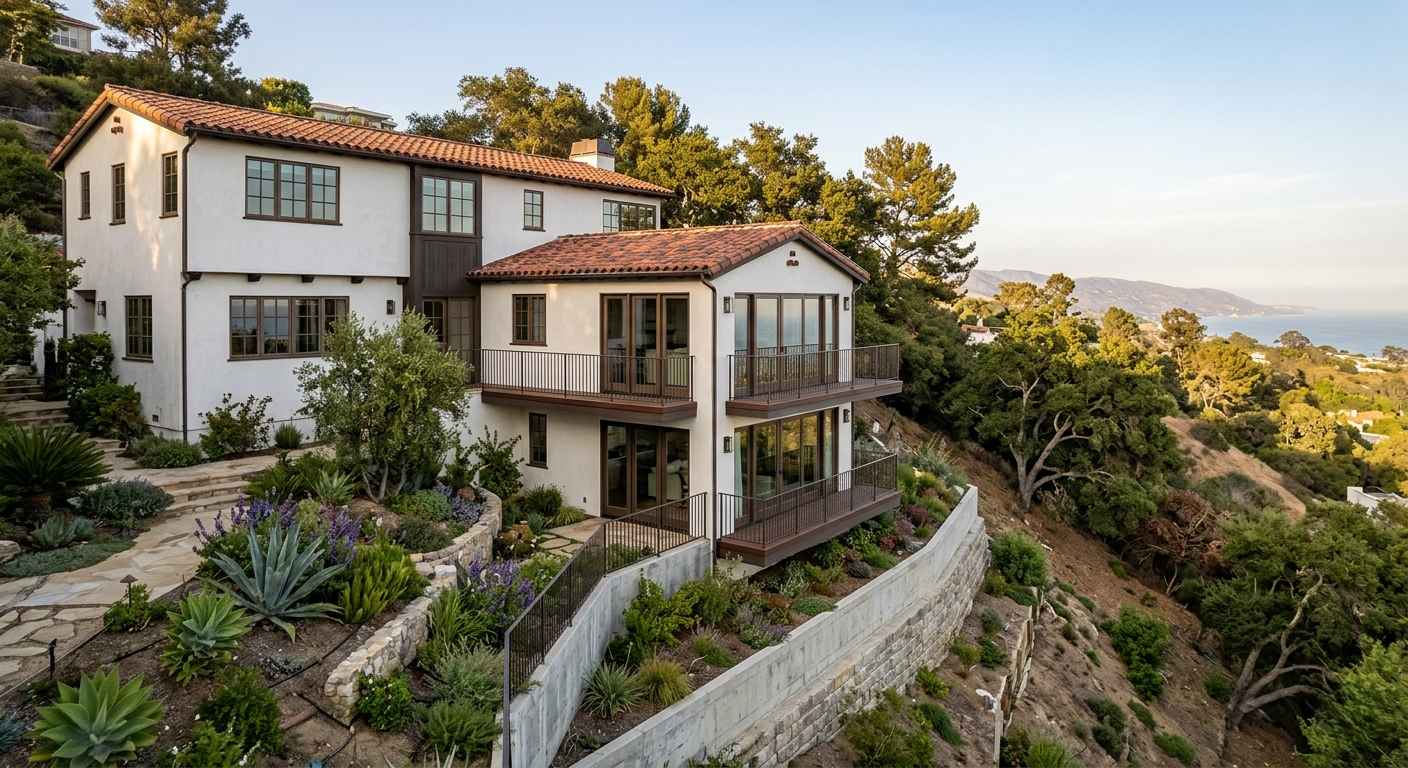
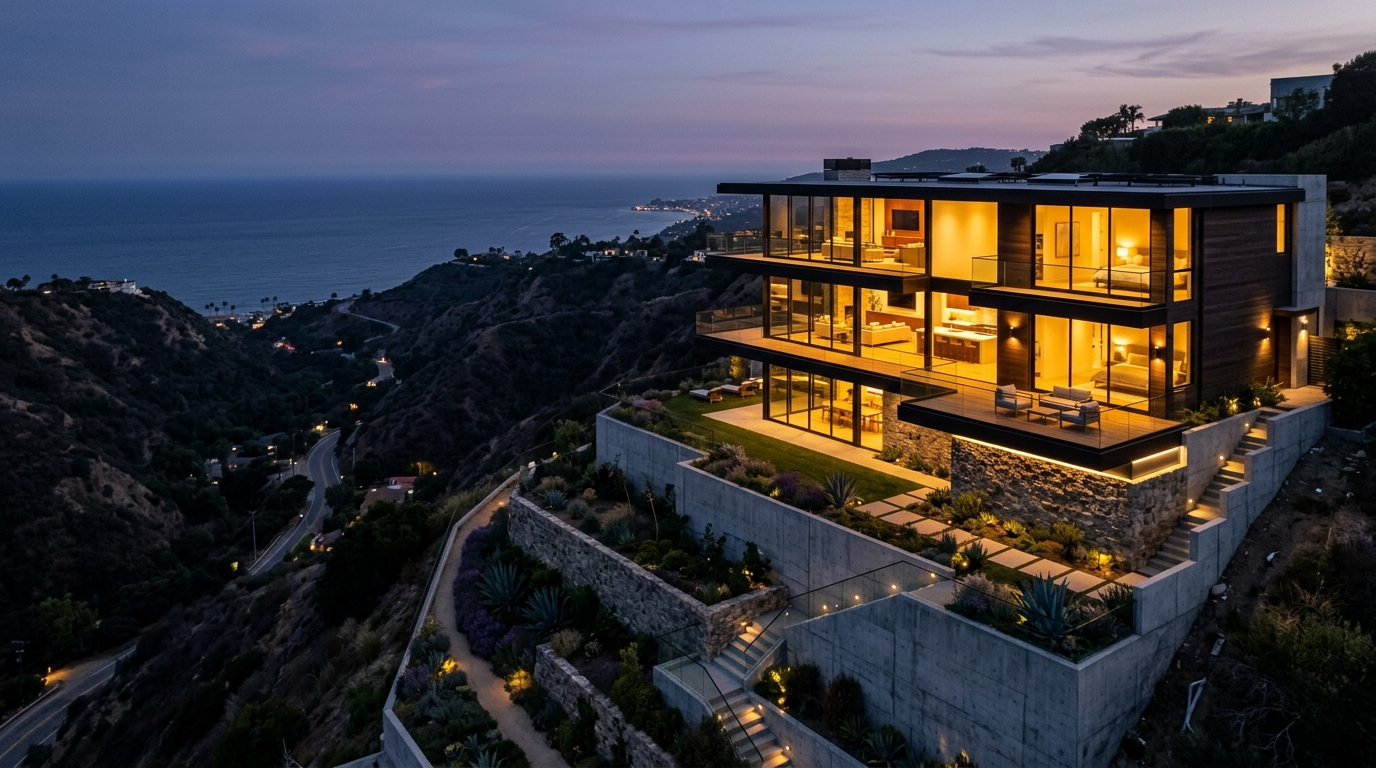
Hillside home Pacific Palisades completed luxury ocean canyon view evening
Start your hillside project

Your hillside lot's full potential, engineered to last.

Every hillside project starts with a free site assessment — we walk your lot, assess slope conditions, confirm your BHO envelope, and give you an honest cost and timeline estimate. No pressure. No obligation. Just a clear picture of what your site requires and what it will cost.

License
CSLB #982386
Specialty
Hillside · BHO · Caissons
Experience
18 yrs · Palisades
Rating
5★ · 107 reviews
★★★★★

"Our lot in the Highlands has a 35% slope. Every contractor we spoke to said it was too complex. Pacific Palisades Remodeling walked the lot, told us exactly what it needed, and built it. The caissons went 44 feet to bedrock. The house has been there through two winters without movement."

M
Michael & Janet R.
The Highlands · New hillside home · $2.1M
★★★★★

"We needed three engineered retaining walls to build our pool on a Rustic Canyon slope. They managed the geotechnical engineer, structural engineer, grading permit, and construction. One call for everything. The walls are solid and look beautiful."

B
Barbara K.
Rustic Canyon · Retaining walls + pool · $185,000
Scroll to Top