
LADBS Standard Plan Pilot Program: Should You Use a Pre-Approved Design for Your Rebuild?
The City's free pre-approved home plans eliminate most of the plan-check phase — potentially saving 2–4 months on your rebuild. We break down who qualifies, what designs are available, and the tradeoffs vs. a custom design.
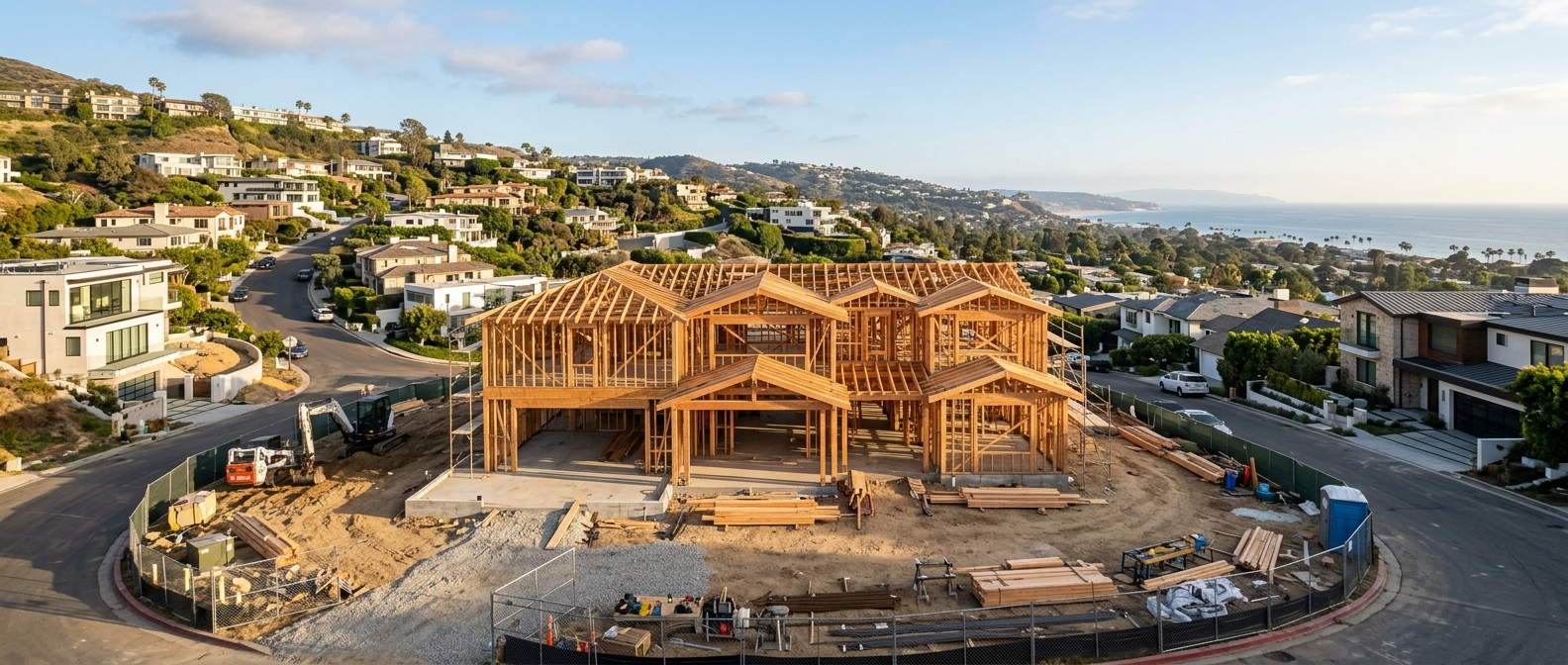
The LADBS Standard Plan Pilot Program is one of the most underused tools available to Palisades fire rebuild homeowners. Free pre-approved designs, dramatically reduced permit timelines, and no sacrifice in quality — but there are legitimate tradeoffs to understand before you commit.
The LADBS Standard Plan Pilot Program was launched specifically in response to the January 2025 fires. It offers a catalog of architecturally designed, code-compliant home plans that have been pre-reviewed and approved by LADBS. Homeowners who select a standard plan can skip most of the plan-check phase entirely — the most time-consuming step in the permit process.
The program is free. The plans are free. Permit fees are separately waived under EO No. 7. The standard plan pathway is one of the fastest ways to break ground.
How Much Faster Is It?
The plan check phase — where LADBS reviews your submitted architectural and structural drawings — is typically the longest single step in the permit process. For a custom design on a straightforward Palisades lot, plan check alone can take 30–90 business days, with correction cycles adding additional time.
With a standard plan, this phase is dramatically compressed because LADBS has already reviewed and approved the design. What remains is site-specific review — confirming the plan works for your particular lot conditions, setbacks, and utility connections.
| Approach | Plan check timeline | Total permit timeline | Cost |
|---|---|---|---|
| Standard plan (pre-approved) | 1–5 business days | 2–6 weeks | Fees waived (EO No. 7) |
| Custom architect plans | 30–90 business days | 3–6 months | Fees waived (EO No. 7) |
| Architect self-certification | Same day (architect certifies) | 1–3 weeks | Fees waived (EO No. 7) |
Timelines assume a complete application. Incomplete submissions or site-specific complications (soils reports, coastal review) add time regardless of plan type.
"The first post-fire rebuild permit in the Palisades was issued in 57 days using a standard plan. Most custom-plan permits in the same period took 4–6 months."
What Plans Are Available?
The LADBS standard plan catalog includes designs across a range of sizes and configurations. The plans were developed by licensed architects specifically for California hillside and coastal residential contexts. All plans are WUI-compliant and meet 2026 code standards.
Representative examples from the catalog include:
Who Qualifies for the Standard Plan Program?
The program is open to Palisades fire rebuild homeowners, but not all lots are suitable for standard plans. The key qualifying factors are:
Lot size and shape: Standard plans are designed for typical residential lots. Irregularly shaped lots, very narrow lots, or lots with unusual setback conditions may require custom modifications that reduce the time savings.
Slope: Most standard plans work best on flat to gently sloping lots. Steeply sloping lots in the Highlands or Rustic Canyon typically require custom foundation engineering that adds time regardless of the plan type.
Coastal Zone: Properties in the Coastal Zone that require Coastal Commission review will have that review timeline added regardless of which plan type is used — though the plan check phase is still compressed.
Soils report: If your lot requires a soils and geology report (most hillside Palisades lots do), that review runs in parallel with the plan check phase and does not add time to a standard plan process — both can proceed simultaneously.
Previous home size: Your new home can be up to 110% of the previous footprint. If the desired plan size is within this limit, you qualify. If you need a larger home, you may need a custom design or an exception process.
Standard Plan vs. Custom Design: The Honest Tradeoffs
The standard plan is not the right choice for every homeowner. Here is an honest assessment of both pathways:
Our Recommendation
Use a standard plan if your lot is reasonably flat, your desired size is available in the catalog, and you prioritize getting home over having a fully custom design. The time savings — typically 2–4 months — translate directly into months of rent you don't pay and months sooner you are back in your neighborhood.
Use a custom design if your lot is complex, you have specific architectural requirements that the catalog cannot accommodate, or the size you need exceeds what standard plans offer. The architect self-certification pathway (also under the City's streamlined program) can compress custom plan review to near-standard-plan speeds for qualifying homeowners.
How to Use the Standard Plan Program — Step by Step
- 1
Review the current LADBS standard plan catalog with your contractor. Confirm which plans are available and which are geometrically compatible with your lot dimensions and setbacks.
- 2
Select a plan that fits within 110% of your previous home's square footage and suits your lot conditions. Your contractor should verify slope, soil conditions, and setback compliance before selection is finalized.
- 3
Submit to all applicable agencies simultaneously. For most Palisades lots this means LADBS and the LA County Grading Division. For Coastal Zone lots, add the Coastal Commission.
- 4
Apply for the EO No. 7 permit fee waiver at the same time. Do not wait — the waiver does not apply retroactively to already-paid fees.
- 5
Proceed with interior customization planning during the (short) permit review period. Interior layouts, finishes, fixtures, cabinetry, and mechanical systems can all be planned in parallel — nothing about the standard plan locks in interior decisions.
Free site visit, no obligation. We'll tell you honestly whether a standard plan is right for your lot or whether a custom design is a better choice. CSLB License #982386.