
California's 2026 WUI Code:
What Every Palisades Homeowner
Must Know Before Building
The 2026 Wildland-Urban Interface building code became mandatory on January 1st — and it applies to every project in Pacific Palisades, including decks, ADUs, garage conversions, and siding replacements. Here's exactly what it requires and what it costs.
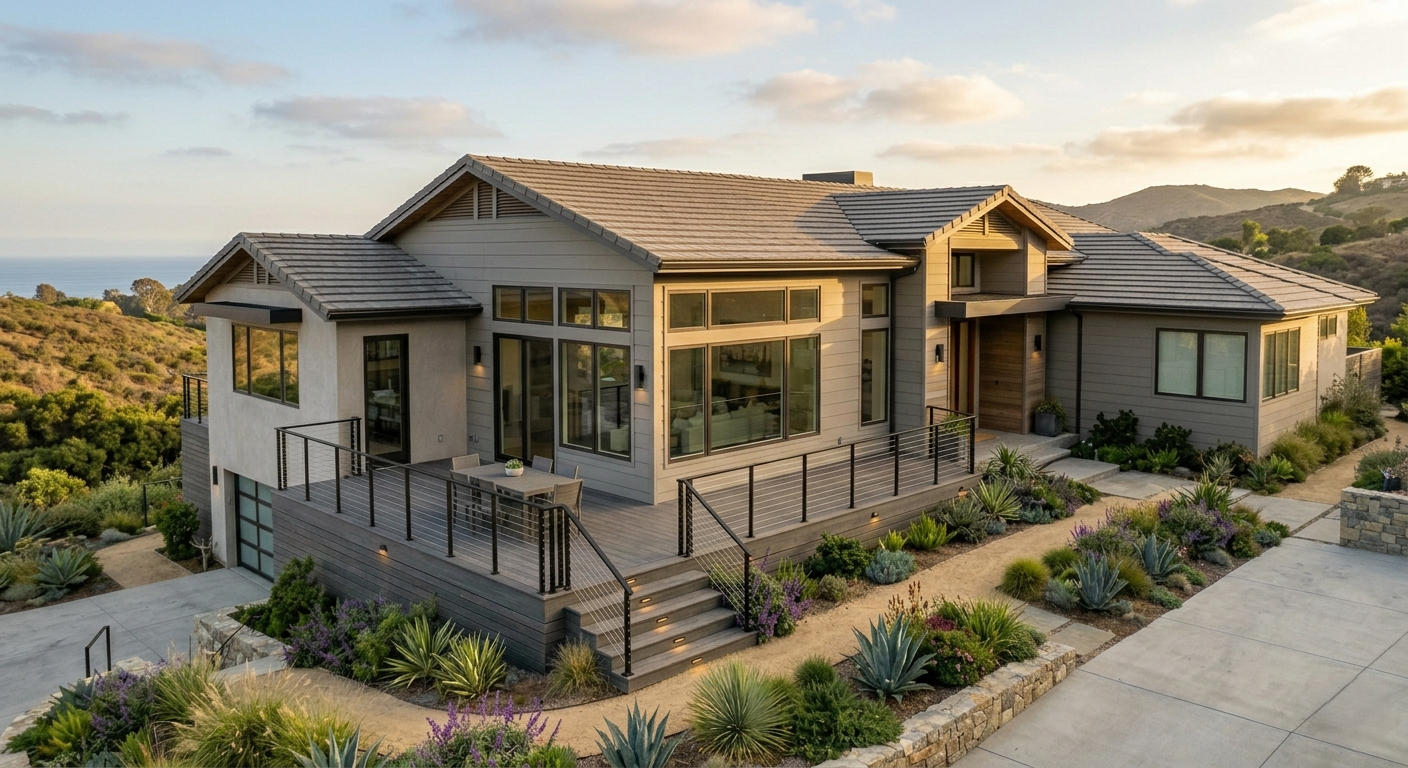
Pacific Palisades has been in a designated Very High Fire Hazard Severity Zone since 1999. But for decades, the wildfire construction standards were scattered across multiple code sections, inconsistently enforced, and poorly understood by most contractors. The 2026 WUI code changes all of that — consolidating every requirement into a single framework that now applies to every project in the Palisades, from a full rebuild to replacing your exterior siding.
The 2026 WUI code applies to all new structures, additions, and exterior alterations in a Fire Hazard Severity Zone. This includes garages, ADUs, detached workshops, decks, and — critically — projects that involve exterior wall cladding replacement. If you're touching the outside of your home, you may trigger WUI compliance requirements.
The Palisades has been a VHFHSZ since 1999. If your home is in the Palisades, assume the 2026 WUI code applies to your project unless confirmed otherwise by your contractor or a permit specialist.
What Is the WUI Code and Why Did It Change in 2026?
The Wildland-Urban Interface (WUI) is the zone where developed land — homes, neighborhoods, roads — meets wildland vegetation. Homes in the WUI are at dramatically higher risk of ignition during a wildfire than homes in dense urban areas, because they are surrounded by combustible fuel sources and exposed to wind-driven embers that can travel miles from an active fire front.
Before 2026, California's wildfire construction requirements were split across two different code sections — Chapter 7A of the California Building Code and Section R337 of the California Residential Code. Contractors and inspectors had to cross-reference both, and many didn't. The January 2025 Palisades fire — which destroyed thousands of structures — accelerated the state's push to consolidate and strengthen these standards.
The result is Title 24, Part 7 — the 2026 California Wildland-Urban Interface Code. It took effect January 1, 2026, and consolidates everything into a single, comprehensive regulatory framework. Under AB 130, this code will remain in force through at least 2031 — a six-year cycle that gives contractors and homeowners long-term regulatory certainty.
"The 2026 WUI code is not optional, not negotiable, and not something your contractor can work around. Every project that triggers it must comply — or it will not receive a certificate of occupancy."
What Triggers WUI Compliance on Your Project?
This is the question we hear most often, and it has a broader answer than most homeowners expect. WUI compliance is triggered by any of the following on a property in a Fire Hazard Severity Zone:
New construction — any new home, ADU, detached garage, or accessory structure built on your lot
Additions — any addition to an existing structure that increases square footage or requires a new building permit
Exterior wall alterations — replacing, reclading, or significantly repairing exterior wall coverings (siding, stucco, cladding panels)
Roof replacement — any permitted roof replacement in a VHFHSZ triggers roofing compliance requirements
Deck construction — new or replacement decks attached to the primary structure
Fire rebuilds — all post-fire reconstruction, regardless of scope
The 6 Core WUI Requirements
The 2026 WUI code organizes its requirements around the primary pathways by which wildfire ignites and destroys homes: direct flame contact, radiant heat exposure, and — most importantly for the Palisades — wind-driven ember intrusion. The January 2025 fire spread through ember transport far more than direct flame. These six requirements address each ignition pathway directly.
Defensible Space: The Two Zones Explained
Defensible space is the buffer zone of reduced vegetation between your home and the surrounding wildland. It does two things: gives firefighters a safer area to defend your home, and reduces the likelihood that wind-driven embers ignite vegetation close enough to set your structure on fire.
Under the 2026 WUI code and California law, defensible space is divided into two zones with different requirements:
A CAL FIRE or LAFD inspector must sign off on your defensible space before your certificate of occupancy is issued. Schedule this inspection early — don't let it be the last item that holds up your move-in date.
Approved vs. Non-Approved Materials at a Glance
| Building element | Compliant ✓ | Non-compliant ✗ |
|---|---|---|
| Roofing surface | Concrete tile, metal, Class A composite shingle | Wood shake (any), standard asphalt (non-Class A) |
| Exterior wall cladding | Fiber cement, stucco, stone, brick, FRTW | Vinyl siding, standard wood siding, OSB exposed |
| Vents | ASTM E2886-rated ember-resistant vents | Standard builder-grade mesh vents, open vents |
| Deck surface | Class A composite, concrete, tile, aluminum | Standard pressure-treated lumber, standard composite |
| Windows (exposed) | Multi-pane tempered glass, fire-rated assemblies | Single-pane glass, standard aluminum frames in high-exposure |
| Garage doors | Steel, fiberglass, or compliant fire-rated assemblies | Standard wood garage doors |
| Eave soffits | Fiber cement, stucco, noncombustible material | Open eaves, standard wood soffits |
This table provides general guidance. Specific products must be confirmed against the 2026 WUI code requirements and verified by your contractor before specification. Local amendments may apply.
What WUI Compliance Costs — A Realistic Breakdown
The most common question after "what does the WUI code require" is "how much does it add to my project cost?" The honest answer is: more than most homeowners initially budget for, but less than the cost of losing your home again.
Industry estimates for WUI compliance on a new build average $9,000–$15,000 above standard construction costs. On a fire rebuild, where the scope is larger and all systems must comply, the additional cost can be higher. Here is a realistic breakdown by component:
Most homeowner policies include ordinance or law (code upgrade) coverage, which covers the additional cost of bringing your rebuilt home to current code standards. WUI compliance costs are the primary code upgrade expense for Palisades fire rebuilds.
Before construction begins: confirm in writing with your adjuster that your code upgrade coverage includes WUI compliance costs. Get a specific dollar amount confirmed, not just a percentage. If the coverage is insufficient, supplemental claims are possible — your contractor should document all WUI-required costs separately from standard construction costs to support this.
The WUI Inspection Checklist — What Inspectors Look For
WUI compliance is verified at several points during construction — not just at the final inspection. Understanding what inspectors check at each stage helps avoid costly corrections and delays.
WUI Code and ADUs — What Applies to Your Guest House or Garage Conversion
A common misconception is that WUI requirements only apply to the primary home. They don't. The 2026 WUI code applies to all structures on the lot — including new ADUs, garage conversions, detached workshops, and pool houses.
If you're building a new detached ADU in Pacific Palisades, it must meet the same WUI standards as the primary home: Class A roofing, ember-resistant vents, noncombustible or ignition-resistant cladding, and — if it has a deck — noncombustible decking. The same inspection points apply.
For garage conversions, the WUI requirements depend on the scope of the conversion. If you're making a minor interior conversion with no exterior work, you may not trigger the full WUI compliance requirement. But if the conversion involves exterior wall modifications, new vents, roofing work, or deck construction, each of those elements must comply.
The good news: under EO No. 7, permit fees are waived for both the primary home and an ADU built simultaneously. And under AB 462, the ADU can receive its own certificate of occupancy — meaning it can be WUI-inspected and occupied independently, even before the primary home is done.
What to Ask Your Contractor About WUI Compliance
Not all contractors have equal experience with the 2026 WUI code. Many general contractors in Los Angeles have worked primarily in urban neighborhoods where WUI requirements don't apply. For a Palisades project, you need a contractor who has recent, hands-on experience with WUI-compliant construction — not one who has read about it.
Here are the questions to ask any contractor before hiring them for a WUI-compliant project:
- 1
"Can you show me the specific vent products you use and their ASTM E2886 compliance documentation?" A contractor who is genuinely experienced with WUI construction will have this information immediately. One who is not will have to look it up.
- 2
"What exterior cladding system do you typically specify for VHFHSZ projects and why?" Listen for specific product knowledge — brand names, installation methods, and performance reasons — not just "fiber cement."
- 3
"Have you had any WUI-related failed inspections on recent projects, and how were they resolved?" A contractor who has never had a failed WUI inspection is either very new to WUI work or not being honest. The important thing is how they handle and learn from them.
- 4
"How do you document WUI compliance costs separately from standard construction costs for insurance purposes?" This is essential for code upgrade insurance claims. A contractor who doesn't separate these costs will make your insurance claim much harder.
- 5
"Do you include a WUI compliance checklist in your contract scope of work?" It should be there in writing, with specific products listed — not just general statements about meeting code.
Quick Reference: 2026 WUI Code Summary for Palisades Homeowners
Everything you need to remember, in one place:
Who it applies to: Every property in Pacific Palisades (Very High Fire Hazard Severity Zone). Any new construction, addition, or exterior alteration.
When it took effect: January 1, 2026. Applies to all projects permitted after this date.
How long it stays in force: Through at least 2031 under AB 130. Building to this code now protects your investment through the next code cycle.
The six requirements: Class A roofing, ASTM E2886 ember-resistant vents, noncombustible wall cladding, noncombustible decking, fire-resistant glazing (in exposed locations), and defensible space (Zones 1 and 2).
Typical cost premium: $9,000–$28,000 depending on project size and scope. Usually covered under your policy's ordinance or law (code upgrade) provision.
Biggest failure point: Ember-resistant venting. Specify compliant products before framing — not after.
Applies to ADUs: Yes. All accessory structures on a lot in a VHFHSZ must meet WUI standards.
Final CO gate: Defensible space (Zones 1 and 2) must be inspected and signed off by CAL FIRE or LAFD before your certificate of occupancy is issued.
We specify compliant products, manage every inspection, and document all WUI costs separately for your insurance claim. CSLB License #982386. Free consultation, no obligation.