
How to Choose a General Contractor in Pacific Palisades: 8 Questions You Must Ask
Pacific Palisades is a specialized market. The contractor who builds tract homes in the Valley is not equipped to handle Coastal Commission permits, hillside foundations, or WUI compliance. Here is how to verify you are hiring someone who truly knows the area.
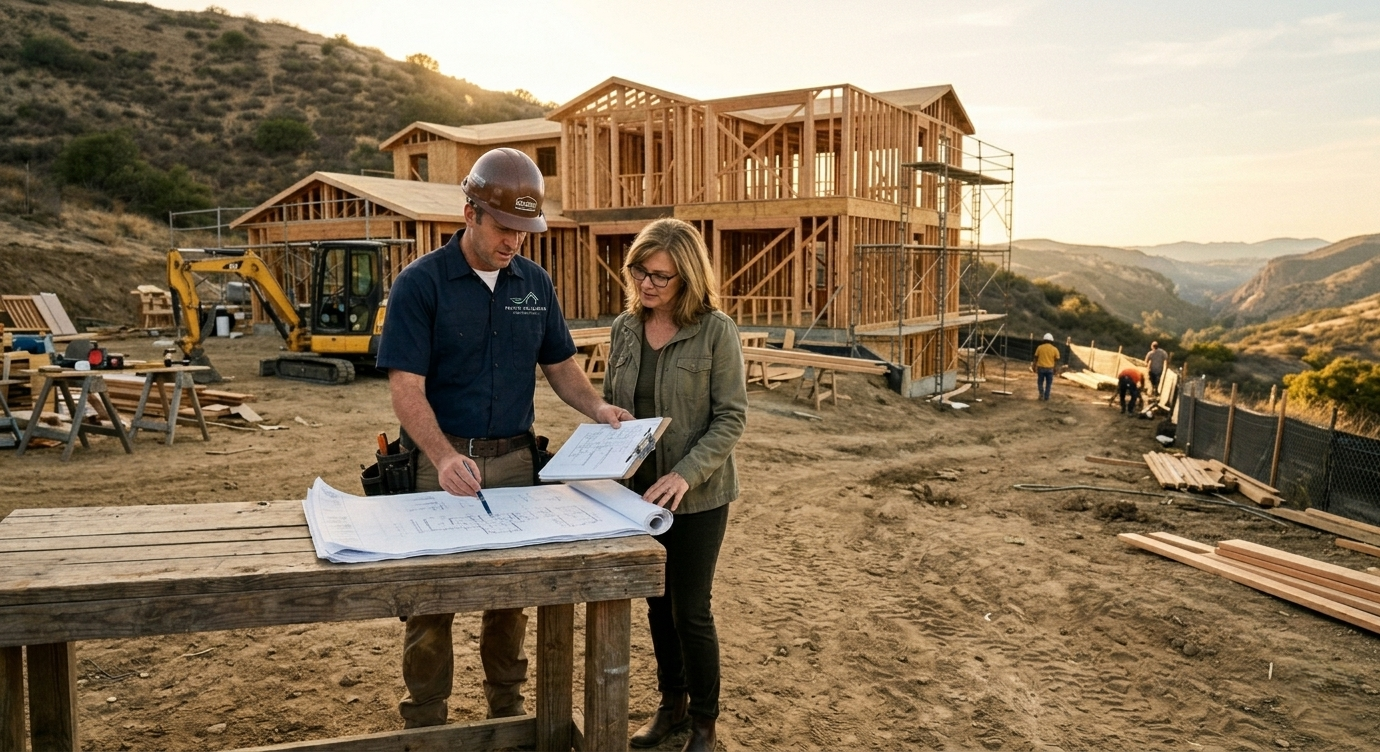
Pacific Palisades is a specialized construction market. The contractor who builds tract homes in the Valley, handles commercial build-outs in Santa Monica, or does quick flips in the Valley is simply not equipped to manage Coastal Commission permits, hillside foundations, WUI compliance, or the quality expectations of Palisades homeowners. Here is exactly what to verify before you sign.
Why "Local Experience" Is Not a Marketing Phrase Here
In most parts of Los Angeles, choosing a general contractor is primarily about quality, communication, and price. In Pacific Palisades, those things matter — but there is a fourth criterion that eliminates most contractors before you even evaluate the other three: regulatory and technical experience specific to this neighborhood.
A contractor without Pacific Palisades experience will:
Submit to LADBS and then wait before engaging the Coastal Commission — adding 3–6 months to your timeline
Miss the HOA architectural review requirement until after LADBS approval — adding another 4–8 weeks
Underestimate hillside foundation costs because they have priced flat-lot construction
Specify materials that fail WUI inspection because they are unfamiliar with the 2026 code requirements
Commission a soils report after design is complete — adding 10–14 weeks to the schedule
Every one of these mistakes is common. Every one of them costs homeowners real time and money. The right contractor avoids all of them because they have done this work before — in this neighborhood, with these agencies, on these types of lots.
Eight Questions to Ask Every Contractor Before Hiring
- 1
"Can you show me your CSLB license number and confirm it is active?" Every contractor in California must hold an active CSLB license. Verify it at cslb.ca.gov — check that the license is active, the classification is appropriate (Class B General Contractor for most projects), and that workers' compensation and liability coverage are current. Do not accept a copy of a license — look it up yourself.
- 2
"Have you submitted to the California Coastal Commission, and how many times in the last three years?" Any contractor doing work in the Palisades should have recent, direct experience with Coastal Commission applications — not just awareness that the Commission exists. Ask for specific project examples.
- 3
"How do you handle soils reports and grading permits on hillside lots?" The answer should be: "We commission the soils report on day one and run it in parallel with design." If they say they wait for design to be complete before starting the soils process, that is a red flag.
- 4
"Can you walk me through the 2026 WUI code requirements that apply to my project?" A contractor experienced with Palisades construction should be able to explain — specifically — what the WUI code requires for venting, cladding, roofing, and decking. Vague answers ("we meet all code requirements") are not sufficient.
- 5
"Have you worked with the Riviera HOA [or other applicable HOA] architectural review process?" HOA approval runs on a separate timeline from LADBS and must be coordinated in parallel. A contractor who has not navigated it before will cause delays.
- 6
"What is your process for working with insurance adjusters on fire rebuild projects?" For fire rebuild homeowners, the contractor's ability to coordinate with insurance adjusters, document WUI compliance costs separately, and support supplemental claims is essential. Ask for specifics — not generalities.
- 7
"Can you provide three references from completed projects in Pacific Palisades in the last two years?" Not references from other parts of LA. Not references from years ago. Recent, local, same-neighborhood references from homeowners you can actually call. Any qualified contractor should have these immediately available.
- 8
"Have you had any CSLB complaints, arbitration judgments, or licensing actions in the last five years?" This is verifiable on the CSLB website. Contractors who are offended by this question are raising a flag. Contractors who answer it directly and confidently are demonstrating exactly the kind of transparency you want.
Red Flags to Watch For
Significantly lower bid than others: In the Palisades market, bids that come in 20–30% below other qualified contractors almost always reflect one of three things: missing scope items, unlicensed subcontractors, or planned change orders. A low bid that becomes a high-stress, over-budget project is one of the most common homeowner experiences in this market.
Pressure to sign quickly: A qualified contractor with a full schedule should not need to pressure you into a quick decision. Urgency tactics are a common sign of financial instability or a contractor who knows their bid will not hold up under scrutiny.
Vague contract language: Your contract should specify exact materials (by brand and model where applicable), scope of work by line item, payment schedule tied to milestones (not arbitrary dates), and change order procedures. A contract that says "kitchen remodel per plan" without line-item specificity is not a contract — it is an agreement to argue about scope later.
Requests for large upfront payments: California law limits the initial deposit to the lesser of $1,000 or 10% of the contract price for projects over $500. Any contractor asking for 25–50% upfront before work begins is either unfamiliar with the law or in a cash flow position that should concern you.
Cannot name their structural engineer or geotechnical engineer: For any Palisades project that involves structural or hillside work, a qualified contractor should have established relationships with licensed structural and geotechnical engineers. "We'll find one when we need one" is not a satisfactory answer.
What Your Contract Should Include
Complete scope of work with line-item specificity — every material, every finish, every system listed by brand, model, and specification where applicable
Payment schedule tied to construction milestones — not arbitrary dates. Payments at permit approval, foundation, framing, rough MEP, drywall, and final completion are a typical structure.
Change order procedure — all changes to scope or price must be in writing, signed by both parties, before work begins on the changed item
Lien waiver provisions — conditional and unconditional lien waivers from the contractor and all subcontractors at each payment milestone
Insurance certificates — general liability (minimum $2 million per occurrence) and workers' compensation (required for any contractor with employees)
Dispute resolution process — specify mediation before arbitration or litigation, with the venue and governing law defined
We are happy to answer every question on this list and provide Palisades references immediately. CSLB License #982386. Free consultation.