
Code Upgrade Coverage: What Your Policy Should Pay for When WUI Compliance Adds Cost
Your homeowner policy likely includes ordinance or law coverage that should pay for the additional cost of WUI compliance on your rebuild. Most homeowners never explicitly claim it. Here is how to make sure you do.
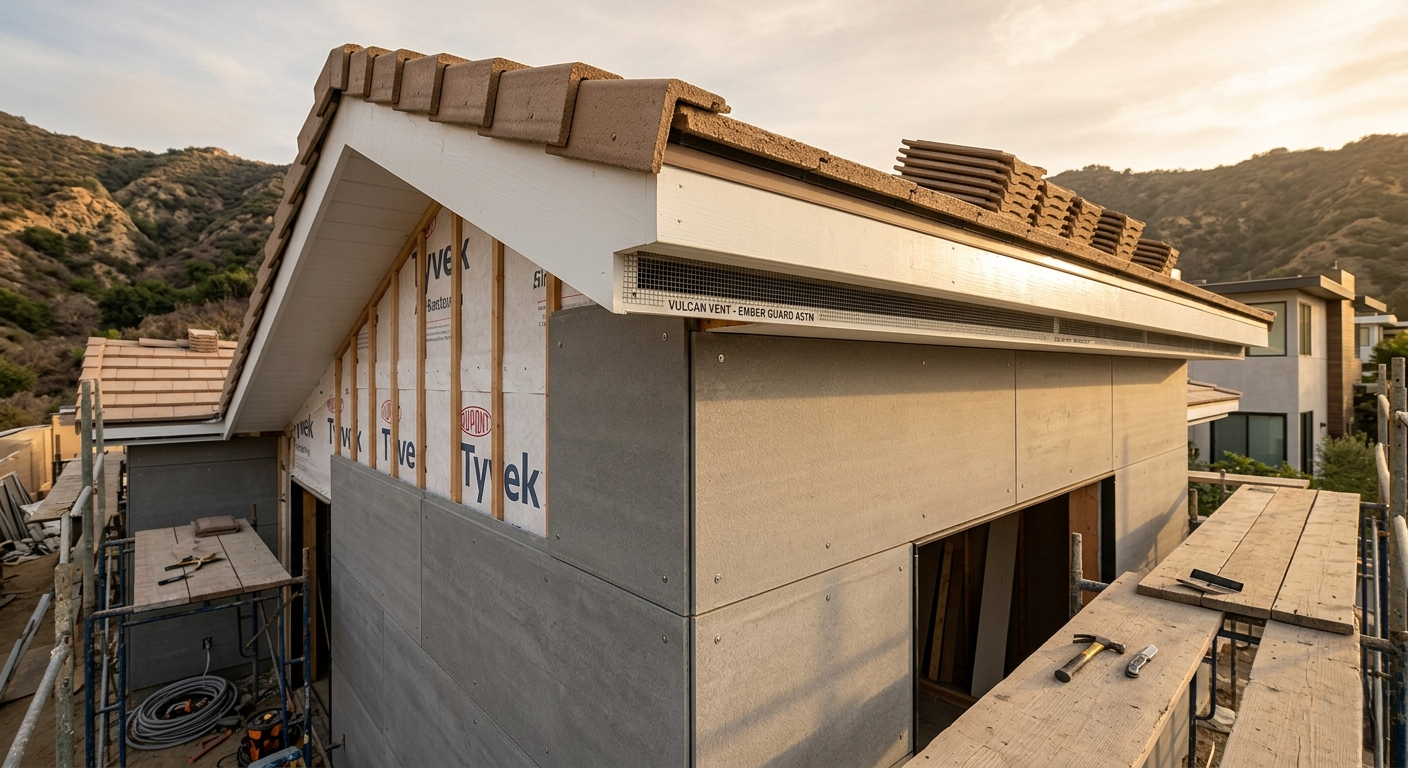
The 2026 WUI code adds $9,000-$28,000 in required upgrades to most Palisades fire rebuilds. These are not optional improvements — they are legally mandated. Your insurer is generally obligated to cover them under ordinance or law provisions. The problem is that most adjusters will not volunteer this coverage unless you specifically request it.
What Is Ordinance or Law / Code Upgrade Coverage?
Ordinance or law coverage — sometimes called code upgrade coverage or building ordinance coverage — is a provision in most California homeowner policies that covers the additional cost of rebuilding to current code standards when those standards are more stringent than what existed when the home was originally built.
California homes built before 2026 were not built to the 2026 WUI code. When your Palisades home is rebuilt, it must meet the new code. The additional cost of doing so — above and beyond simply rebuilding what existed before — is what ordinance or law coverage is designed to fund.
Every policy uses slightly different language. Find the specific provision that addresses code compliance costs and confirm: (1) it exists, (2) what the dollar limit is, and (3) whether it is a flat dollar amount or a percentage of Coverage A.
WUI Costs That Should Be Covered Under Ordinance or Law
Ember-resistant venting systems (ASTM E2886): $2,500-$5,500. Standard vents do not comply — every vent in the structure must be compliant.
Noncombustible deck material upgrade: $3,000-$7,000. Standard pressure-treated lumber does not comply — Class A composite, concrete, or tile is required.
Fiber cement or noncombustible cladding premium: $2,000-$5,000. Standard wood siding does not comply — fiber cement, stucco, or stone is required.
Class A roofing assembly upgrade: $1,500-$4,000. The entire roofing system — not just the surface material — must be Class A rated as a complete assembly.
Fire-resistant glazing: $1,000-$4,000. Multi-pane tempered glass in exposed locations where single-pane previously existed.
Noncombustible soffit and eave enclosure: $800-$2,500. Open eaves and standard wood soffits do not comply under the 2026 code.
How to Make Sure Your Claim Includes These Costs
- 1
Have your contractor itemize WUI compliance costs as a separate line in the estimate. Do not allow them to be bundled into general construction costs. The adjuster must see them clearly as code-required items.
- 2
Reference the specific code provisions that mandate each item — 2026 WUI code (Title 24, Part 7), applicable ASTM standards for venting, and your local VHFHSZ designation.
- 3
Request written confirmation from your adjuster that ordinance or law coverage will apply to WUI compliance line items. Get this before construction begins.
- 4
If your policy limit is insufficient, document the gap and request a supplemental claim or discuss a policy limit review with your broker.
If Your Claim for Code Upgrade Costs Is Denied
If your adjuster denies coverage for WUI compliance costs under your ordinance or law provision, request the denial in writing with specific policy language cited. Then have a public adjuster or insurance attorney review the denial — many denials of WUI compliance costs are incorrect under California law and reversible on appeal or through the California Department of Insurance complaint process.
Our estimates are structured for insurance claim purposes from the start. Free consultation. CSLB License #982386.