
The 110% Footprint Rule Explained: How Big Can You Build When Rebuilding After the Palisades Fire?
Palisades homeowners can rebuild up to 110% of their previous square footage with no design review or conditional use permit. But there are nuances — here's how to measure correctly and maximize what you're entitled to.
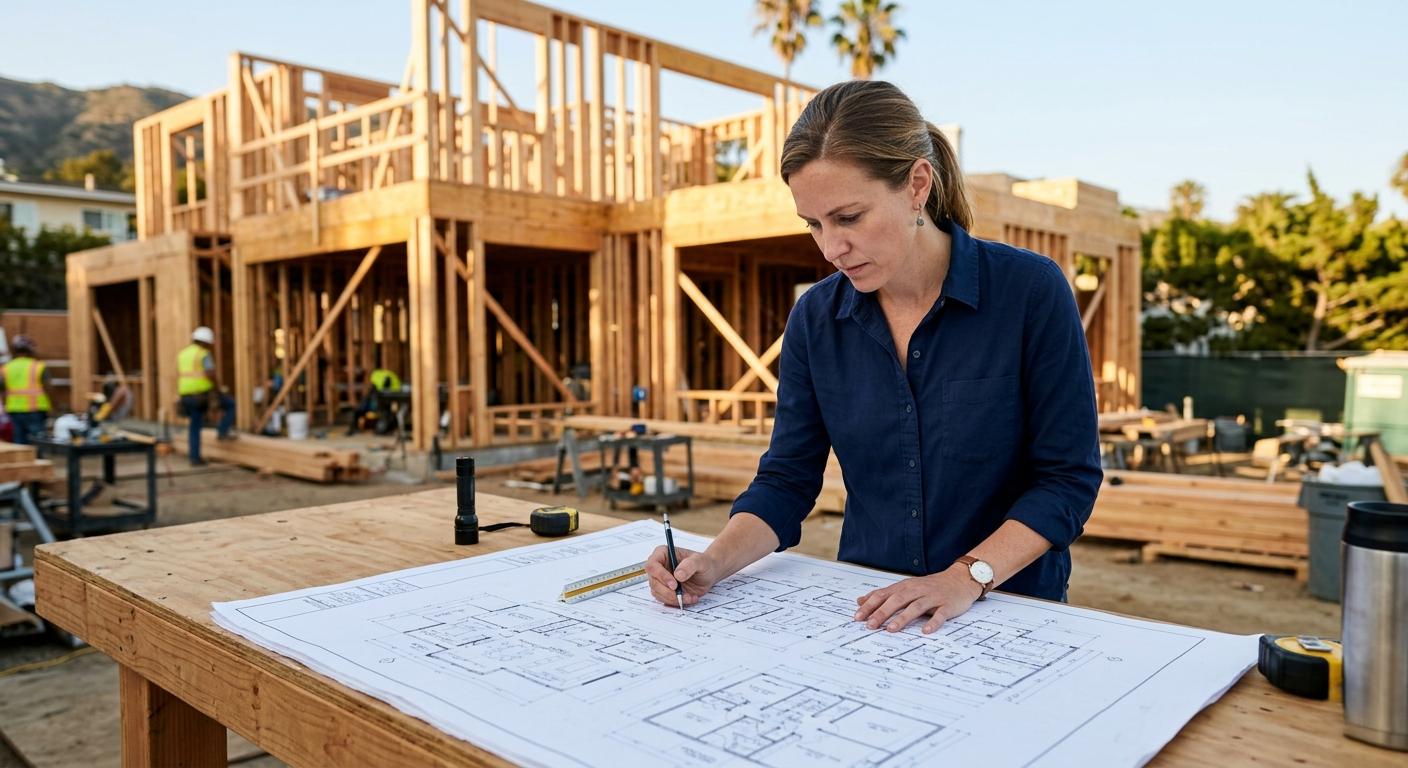
The 110% footprint rule is one of the most powerful concessions in the Palisades fire rebuild framework — and one of the most misunderstood. Here is exactly what it means, how to calculate it correctly, and where homeowners lose square footage they were entitled to.
What the 110% Rule Actually Says
Under the streamlined fire rebuild framework established by the January 2025 executive orders and codified through LADBS policy, Palisades homeowners can rebuild a home up to 10% larger than the pre-fire structure without triggering design review, conditional use permits, neighborhood notifications, or discretionary approval processes.
This is significant because most additions in Pacific Palisades — particularly in the Coastal Zone — would normally require extensive review processes that can take months. The 110% rule bypasses all of that for qualifying fire rebuilds.
The 320 sq ft addition is essentially free from a permitting standpoint. In Pacific Palisades, where lot values make additions expensive and regulatory processes make them slow, this is a meaningful benefit that most homeowners are not fully taking advantage of.
How to Measure Your Pre-Fire Square Footage Correctly
The accuracy of your pre-fire square footage measurement directly determines how much you can build. Using an incorrect or understated number costs you real square footage — permanently. Here is how to establish the correct number:
Original building permits and plan sets — the most authoritative source. If you have these, they show the approved square footage of the structure as built.
LADBS permit records — searchable online by address. Your contractor can pull all permits issued for your property and determine the total approved footprint from those records.
Licensed surveyor or architect measurement — if permit records are incomplete or the home included unpermitted additions, a licensed professional should establish the pre-fire footprint from insurance records, appraisals, or physical evidence remaining on the lot.
County assessor records — useful as a reference but often understated, as assessor records do not always capture permitted additions or room conversions. Do not use assessor records as your sole source — they frequently undercount livable square footage.
What Counts Toward the Footprint — and What Doesn't
The 110% calculation applies to conditioned habitable square footage — the enclosed, heated/cooled living space of the primary home. Understanding what does and does not count is important for maximizing your allowable rebuild:
| Space type | Counts toward 110%? | Notes |
|---|---|---|
| Conditioned living areas | Yes | All heated/cooled rooms, hallways, closets within the conditioned envelope |
| Attached garage | Generally no | Typically excluded from habitable sq ft, but confirm with LADBS for your specific application |
| Detached ADU | No — calculated separately | New ADU square footage is independent of the 110% cap |
| Covered porch / patio | Generally no | Unconditioned covered outdoor space typically not included |
| Basement (conditioned) | Yes | Conditioned below-grade space counts as habitable square footage |
| Attic converted to living space | Yes if conditioned | Only if the space was permitted as habitable before the fire |
These are general guidelines. LADBS applies specific definitions to each application. Confirm the square footage calculation methodology with your contractor before submitting plans.
The ADU Advantage: An Independent Bonus
One of the most valuable aspects of the current rebuild framework is that ADU square footage is calculated completely independently of the 110% cap on the primary home. This means:
You can rebuild your primary home at 110% of its pre-fire size AND add a new 1,000 sq ft ADU on the same lot — without either affecting the other
If you previously had no ADU, you can add one now without it counting against your primary home's 110% allowance
Under AB 462, the ADU can receive its own Certificate of Occupancy independently, allowing you to move back to the property before the primary home is complete
"A homeowner with a 2,800 sq ft pre-fire home can rebuild at 3,080 sq ft AND add a 900 sq ft ADU — adding nearly 1,200 sq ft of total space to the property with no design review required."
Going Beyond 110% — What Happens
If you want to rebuild more than 110% of your previous square footage, you exit the streamlined process and return to the standard discretionary review system. This includes:
Neighborhood notification and a public comment period
Design review through the appropriate commission
Conditional Use Permit (CUP) process if the expansion triggers zoning review
Full Coastal Commission review if the property is in the Coastal Zone
For most homeowners, the additional time — typically 6–18 months — and the uncertainty of discretionary review processes make exceeding the 110% limit inadvisable. The better strategy is to use the full 110% allowance for the primary home, and separately maximize the ADU allowance for any additional space needed.
Free site visit. We pull your permit records, calculate your exact allowable footprint, and help you plan the best use of every square foot. CSLB License #982386.